From chatbot to colleague: how AI assistants actually do things in 2026
Three years ago, AI assistants could talk about your work. Now they can do it. The shift is subtle on the surface and enormous in practice. Here's what changed — and what it feels like to live with it.
The first generation of AI assistants — Siri, Alexa, Google Assistant — were impressive demos. They could set a timer, answer trivia, play a song. What they couldn't do was anything that mattered. They could talk about your work but never join it.
The second generation — ChatGPT and its peers — went deeper. They could write, summarise, plan, reason. But they still lived in a chat window. To get value out of them, you had to interrupt your day, paste your context in, read the answer, and copy it somewhere useful. They were brilliant on demand. They were not present.
What changed
Three things had to align before AI assistants could feel like colleagues rather than tools: they had to be persistent (remembering who you are between conversations), connected (with their own access to calendars, mail, files), and proactive (capable of starting a conversation, not just waiting for one).
All three are now mainstream. Modern assistants carry memory across sessions. They have their own credentials — they don't need to log in as you. And they're starting to surface things at the right moments, like a good chief-of-staff would.
The shift from "on-demand" to "present"
The hardest thing for the first AI assistants to do was to stay quietly useful. Always around, never in the way. A good colleague doesn't interrupt you every fifteen minutes asking if you need help. They watch, they listen, and they speak up when it matters. That kind of restraint is much harder to build than raw intelligence, and it's the thing that separates a product you actually keep using from one that gathers dust in the second week.
“The best assistant isn't the loudest one. It's the one you forget is there until you need it.”
What it feels like in practice
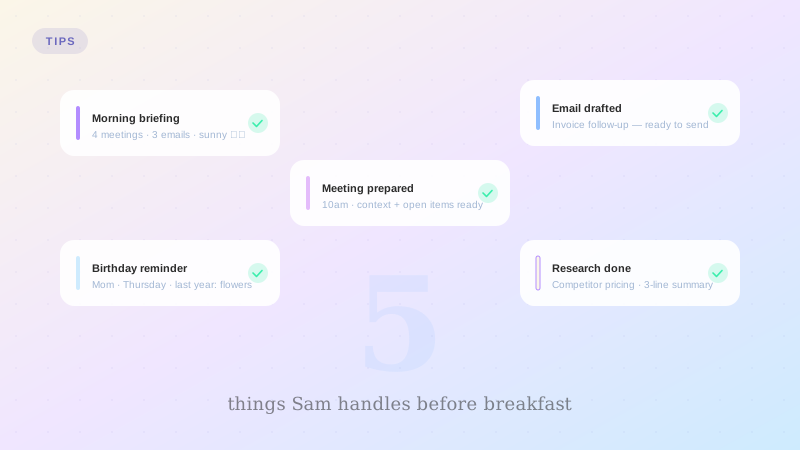
On a typical day with an assistant that genuinely works for you, you don't notice the AI most of the time. You just have fewer open loops. The dentist is rescheduled. The follow-up email got sent. The thing you said you'd do next Tuesday is on your radar. Small things, but enough of them, and the texture of the day changes.
We talk a lot about AI replacing jobs. The more useful frame, at least at the consumer end, is AI taking back the small invisible jobs you never wanted in the first place — the ones that fill in the gaps between the work you actually care about.
The WiseSam Team
Building the personal AI assistant everyone deserves.